
For 36 years Karl Lagerfeld ran Chanel. For 54, Fendi. For most of the overlap, a label with his own name on the door too — three houses, three cities, three design languages, none of them his to own. He kept all three sharp for decades by quietly rewriting what a creative director even was.
Who was Karl Lagerfeld?
He was the white-ponytailed, black-sunglassed, fingerless-gloved figure who took his bow at the end of a Chanel show — the most recognizable person in a room full of people paid to be looked at. That silhouette is the point, and we'll come back to it.

The résumé, briefly, because the résumé is not the story. Born in Hamburg in 1933, Lagerfeld apprenticed under Pierre Balmain in the mid-1950s, ran the studio at Jean Patou, and by 1974 was sole designer at Chloé.
In 1965 the Fendi sisters hired him in Rome to drag their fur house into the modern era. In 1983 Chanel handed him a couture house that had been drifting since Gabrielle Chanel died in 1971. He kept both jobs, added his own label in 1984, and did not put any of them down until he died in 2019, at 85.
One small tell about the man before we get to the work: for years he refused to confirm his own birth year. Documents cited 1933 and 1938; in 2013 he told Paris Match he was born in 1935. He liked, in his words, to scramble the tracks. Most encyclopedic sources land on 1933 — but the fact that a designer would mythologize his own paperwork tells you what he understood earliest. Which was that the person, not just the product, could be built.
What did Karl Lagerfeld actually change?
Here's the thing most obituaries skated past. Before Lagerfeld, a designer was more or less married to a house. You were Dior's man or Balenciaga's man; your talent and the house's heritage were fused, and leaving usually meant starting over.
Lagerfeld treated the role as portable. The skill — reading a house's DNA, then producing desirable product and the images that sell it — was, in his hands, separable from any one brand and separable from ownership.
He was a hired hand at every house he touched. But he behaved like the asset, not the employee.
 BeforeMarried to the houseTalent fused to a single house's heritage. Leaving meant starting over.
 After LagerfeldThe portable directorThe role treated as portable — the skill separable from any one brand, and from ownership.
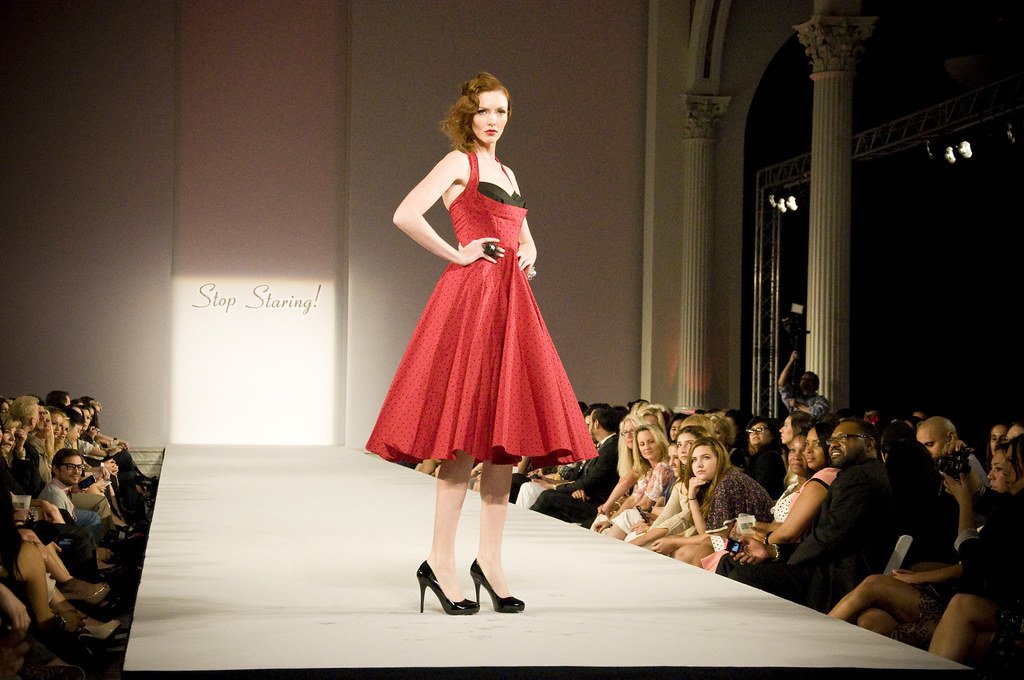
That reframing is the decode. He industrialized creative direction into something scalable: a single director could hold parallel, decades-long contracts at a legacy French couture house, an Italian fur-and-leather house, and a personal commercial label — without diluting any of them — because he folded image-making into the job itself. Photography, runway staging, and persona weren't decoration on top of the clothes. They were the deliverable.
Which sounds abstract until you look at what he did at each house.
What is Karl Lagerfeld's most famous work?
Ask most people and they'll say Chanel, and they're right, but not for the reason they think. Lagerfeld's Chanel achievement wasn't a single garment. It was taking a near-dormant house and re-embedding its own codes — the interlocking-CC monogram, the tweed suit — into aspirational, ready-to-wear-friendly product that people under 60 actually wanted. He didn't reinvent Chanel. He made Chanel legible again, and then he made it loud, and the mechanism was theater. His runways became supermarkets, casinos, a rocket launch. The show stopped being a preview of clothes and became a media product in its own right — imagery that traveled far past the front row. If you want the fuller picture of how Chanel sits in the luxury landscape, that lineage runs straight through him.

Fendi is the part almost nobody knows, and it's the better proof. For 54 years — the longest designer-house tenure in fashion — Lagerfeld treated fur not as a status commodity but as raw material. In 1969 he drew Fendi's interlocking double-F, the monogram the house still runs on today. One man, two of the most durable logos in the business, drawn a continent apart. The fur itself he reworked from the ground up:
- Cut it on the bias
- Spliced it with leather and canvas
- Dyed it colors fur was not supposed to be
- Slid cheaper pelts — rabbit, squirrel — into a luxury line
 The tweed suit — a dormant Chanel code Lagerfeld made legible again for a younger buyer.
 Fur worked like cloth — bias-cut, spliced and dyed off-palette across 54 years at Fendi.
 Two of the trade's most durable logos, one hand: Fendi's double-F (1969) and Chanel's CC.
 He reworked Coco's 2.55 into the 'Classic Flap' — turn-lock swapped for the CC clasp.
 The 2011 'Boy Bag', named after Coco Chanel's first love, Arthur 'Boy' Capel.
So the master loop reopens: how do you keep that quality up, in Paris and Rome and under your own name, for decades? Not by cloning yourself.
How did Karl Lagerfeld run three houses at once?
By solving a problem most designers never even framed. The bottleneck in fashion isn't ideas — it's the designer's own hands and hours. Lagerfeld's move was to stop treating himself as the person who executes and start treating himself as the person who directs: reading each house's language fluently enough to set a clear brief, then steering studios and image-makers to deliver it. Three houses, three vocabularies, one director fluent in all three.
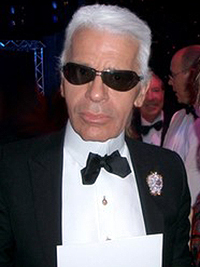
And this is where the sunglasses pay off. The white ponytail, the high collar, the gloves — that instantly-readable costume did real commercial work. It made the director as marketable as the house.
A Lagerfeld show sold Chanel, but it also sold Lagerfeld — which is exactly why a personal label could run alongside two giants without looking like a vanity project. The persona was the through-line that let one name credibly stand behind three.
That template is now the industry default. When a conglomerate installs a marquee creative director and leans on that person's image as hard as on the clothes, that's the Lagerfeld operating model — the director as a portable, brandable asset. He built the playbook the whole business now runs on.
What was Karl Lagerfeld's net worth?
Here the honest answer is a range, not a number. Reporting around his 2019 death put his estate somewhere in the region of $150 million to $300 million, the estimates varying by outlet and none of them a probate-level figure. What's better sourced is the shape of the money: he reportedly held lifetime or percentage contracts at both Chanel and Fendi worth tens of millions a year.
In other words, he got paid like an owner while remaining, technically, a hired designer — which is the whole thesis in dollars.
His will reportedly named his cat, Choupette, among several beneficiaries, and administration of the estate was reported to have been delayed. Treat that as widely-reported color rather than confirmed fact. The real point survives the gossip: the industry paid one director like an institution — and institutions get retrospectives.
Why does Karl Lagerfeld still matter?
Because the model outlived the man. In 2023 the Metropolitan Museum's Costume Institute built its spring exhibition and Met Gala around him — Karl Lagerfeld: A Line of Beauty, curated by Andrew Bolton with his longtime collaborator Amanda Harlech, organized around the tension between his romantic "curved" line and his modernist "straight" one across a full career. A museum retrospective is the establishment conceding that someone changed the terms.

But a retrospective is also a reckoning, and this one owes you the footnote most obituaries buried. The reach came with real costs:
- A vocal defender of fur
- Repeated cutting remarks about women's bodies
- A 1994 apology for printing Quran text on a dress
- Dismissed the #MeToo movement shortly before his death
None of that is laundered by the talent, and pretending otherwise would be its own kind of dishonesty — which is exactly why the model, not the man, is the part worth keeping. So, the loop I opened at the top: how did one man run three houses at once for decades without any of them going soft? Not by working three times as hard. By redefining the job — turning the creative director from a house's in-house craftsman into a portable, self-branding asset who directs image as much as garments. He made himself as marketable as the labels he served, and in doing so wrote the operating manual every conglomerate creative-director hire has followed since. The clothes were the output. The real design was the role.
| Words | Nora Ellison |
| Portrait | Editorial press portrait (Getty editorial) — confirm publication rights before live |
| Runway | 'Chanel Shopping Center', Chanel F/W 2014 — press/runway image, licence pending |
| Installation | 'Karl Lagerfeld: A Line of Beauty', The Met, 2023 — press image, licence pending |
| Gallery | Each tile requires an individual credit + source URL before live (rules.media.inline) |
| Fact-check | Per pre-publish checklist — vital status, dates, net-worth range, Met details |